

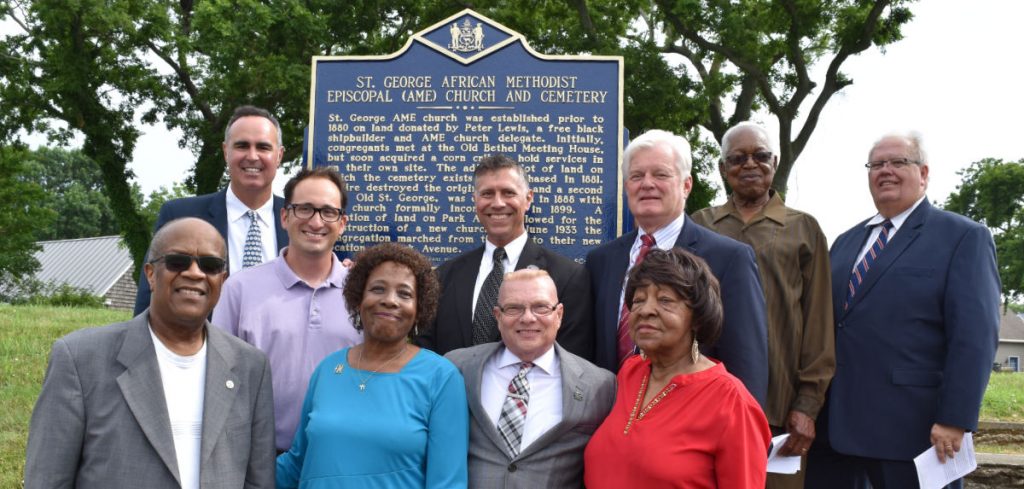
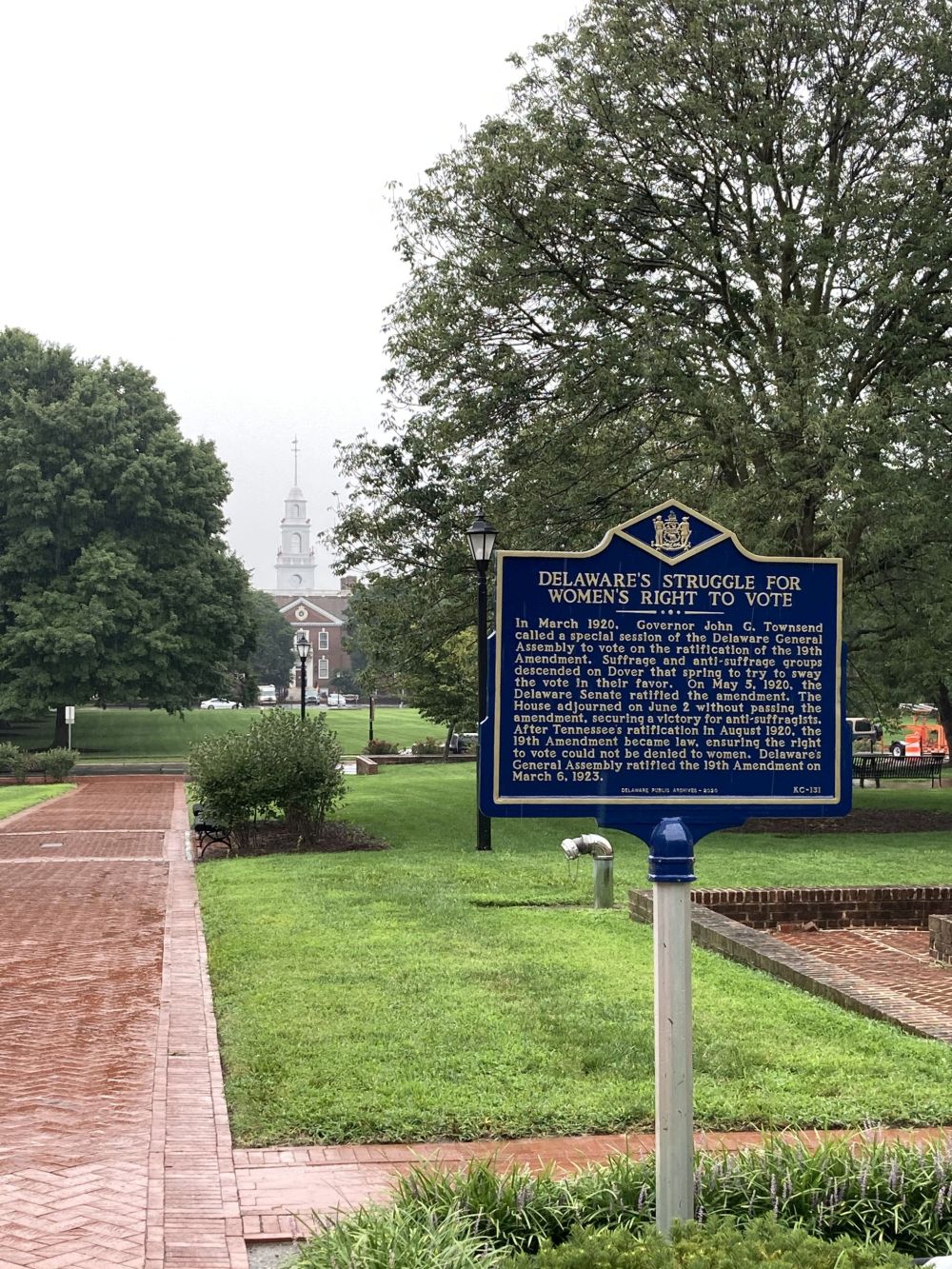
The Delaware Historical Marker Program began in 1931 when the General Assembly of Delaware passed an act establishing a permanent commission to erect historical markers throughout the state. The markers in each county were numbered sequentially as they were proposed, preceded by NC (New Castle), K (Kent) and S (Sussex) to note the county in which they were located. Since the beginning of the program in the 1930s, the State of Delaware has erected 685 markers. The Delaware Public Archives (DPA) has administered the Historical Markers Program since 1990.
Community members and the state legislature have always played active roles in the Historical Markers Program. Today every new state historical marker is the result of partnerships between the Delaware Public Archives, state legislators, and local community members. Funding for each marker comes as a result of a direct request to members of the General Assembly from interested individuals and organizations. As a result, the markers represent Delawareans’ shared history and become a source of pride for local communities.
As of July 1, 2020, the cost of a new historical marker is $2,275. This includes the marker fabrication, shipping, and installation. Historical markers are funded by state legislators with public money using state Community Transportation Funds. Financial support for the marker must be secured from the legislators who represent the district where the marker will be placed after the marker application has been reviewed and approved by the Delaware Public Archives.
The Historical Markers Program has existed since 1931 and the style of historical markers has changed over time. The Delaware Public Archives continues maintaining the older styles of historical markers, but only produces new powder-coated cast aluminum markers. New markers are high-quality durable roadside signs that highlight the concise histories of significant sites. The narrative section of the current style of markers has a limit of 650 characters including letters, spaces, and punctuation.
Only the Delaware Public Archives is authorized to install Delaware Historical Markers. We work with a local company to professionally install all historical markers. This ensures markers are installed consistently and according to specifications from the manufacturer and the Delaware Department of Transportation. The cost of installing the marker is included in the price of a new historical marker.
Historical markers are the property of the State of Delaware. Once installed, markers cannot be repaired, refurbished, or relocated without permission of the Delaware Public Archives. If you recognize that a historical marker needs attention, please submit a Marker Repair Form and/or contact the Historical Markers Program Coordinator.
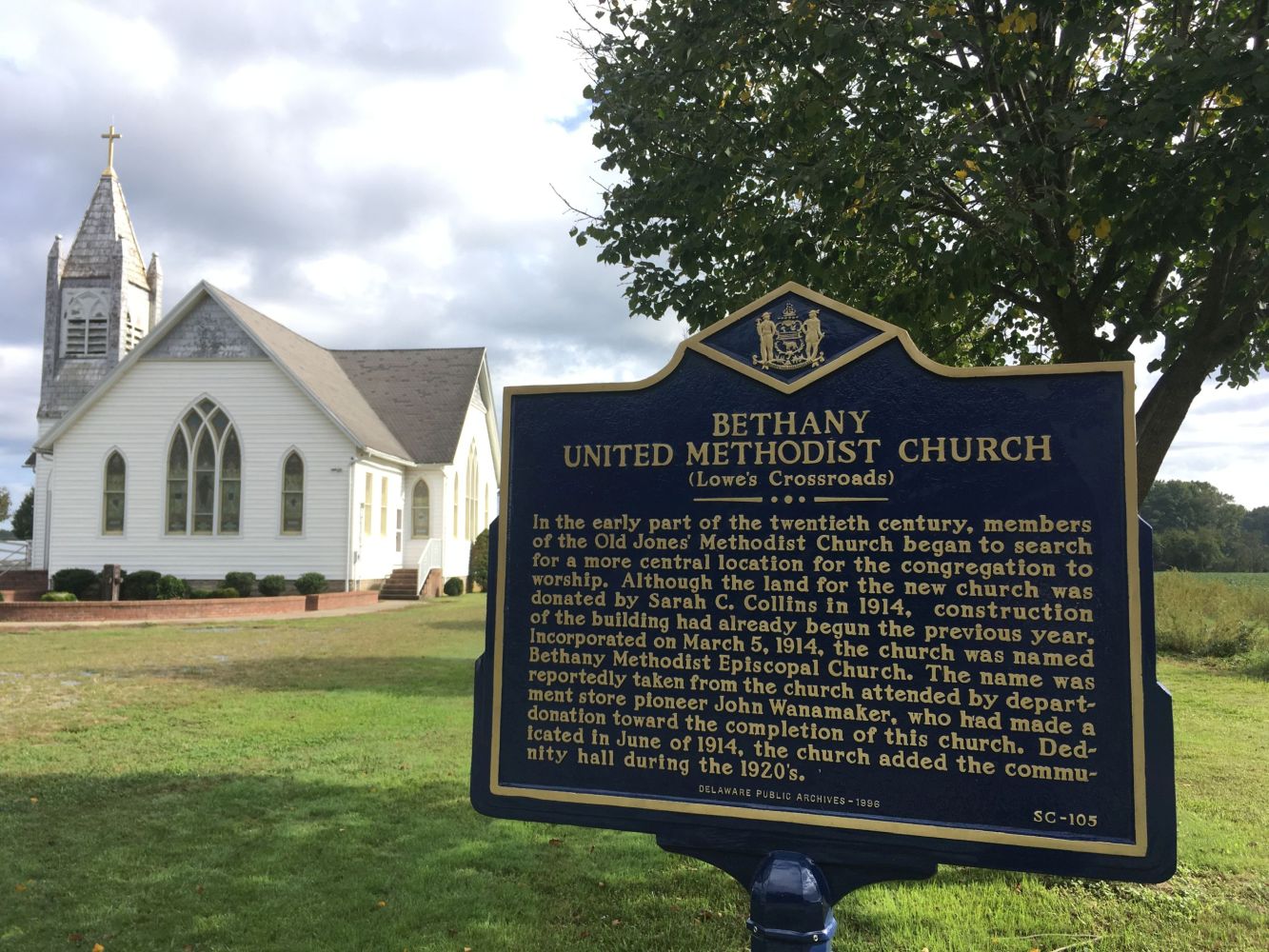
The Delaware Public Archives accepts and reviews applications for new historical markers on a rolling basis throughout the year
Please see the information on Historical Marker Criteria and Eligibility. A few things to note about new historical marker topics:
Listing on the National Register of Historic Places is an honor, but it does not automatically qualify a site or structure for a historical marker. A new marker application is still required for these topics and locations.
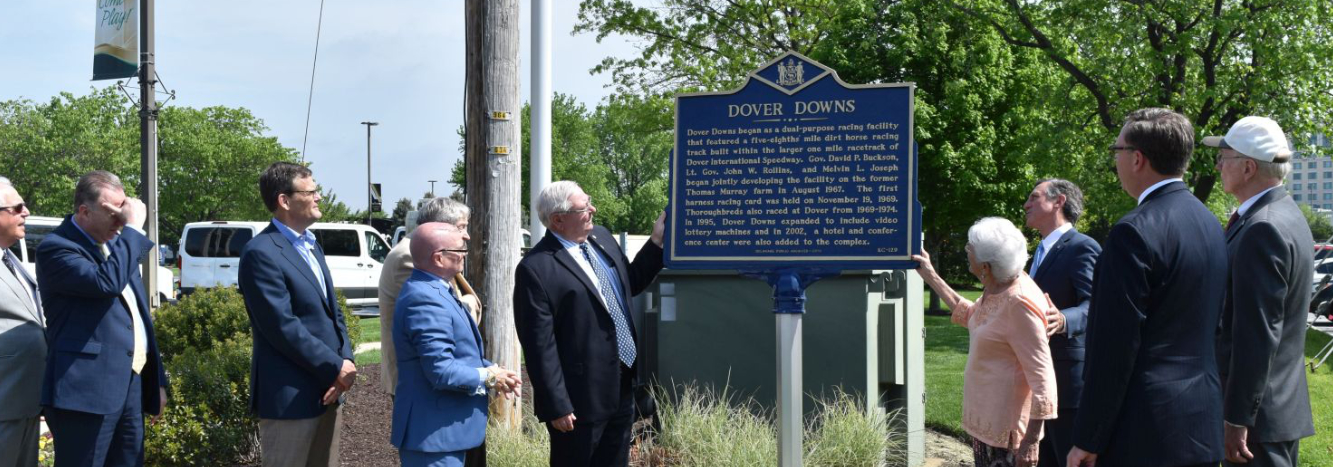
The Historical Markers Program could not be successful without the support of state legislators. However, the program is an outreach of the Delaware Public Archives, which maintains oversight of the markers throughout the state. DPA uses established criteria and an application process to ensure historical markers are an accurate representation of state and local history. Once a historical marker application is reviewed and approved, the Historical Markers Program Coordinator works with state legislators to confirm and secure funding for the new markers.
The Delaware Public Archives expects that research on the marker subject has been completed prior to submitting a new marker application. Copies of this research, including citations, must be submitted with the marker application. Failing to do so will considerably delay the application review process. The Historical Markers Program Coordinator will conduct additional research into the subject using resources of the Archives for the purposes of fact-checking and clarifying details.
Each historical marker project is different, and each project presents its own challenges. The new marker process typically takes between 10-12 months from application approval to marker dedication. Marker fabrication itself takes 8-12 weeks. If you are hoping to dedicate a new historical marker for a particular event or anniversary, please begin the process early!
Ensure the proposed subject meets the criteria for a historical marker.
The application form is available on the Historical Markers Program website. The form works best if you download and save it to your computer before filling out the fields. New applications can be submitted by email or mail.
Please complete the application in full, including the Statement of Significance and Background information sections. Submitting an incomplete application will delay your marker project significantly.
Applicants must provide reliable primary source materials to support facts included marker narratives. The Historical Marker Program Coordinator will perform any additional research, editing, and formatting required for the marker text.
Beginning on March 1, 2021, applicants will be required to include a letter of support for the historical marker application from the property owner/municipality who owns or manages the proposed marker location. This letter will confirm that the applicant has discussed the historical marker project with the property owner and/or local officials and they agree to have a marker installed on their property if the Delaware Public Archives approves the new historical marker application.
The Historical Markers Program Coordinator will contact the applicant to share if the application has been approved.
If approved, the Historical Markers Program Coordinator will set up a site meeting to discuss the next steps in the process, including establishing funding, marker placement and drafting the marker text.
The applicant reaches out to the local legislators who represent the district that the marker is in to seek and confirm financial support of the historical marker.
The Historical Markers Program Coordinator confirms funding commitments and arranges for transfers of funds.
Historical Markers Program Coordinator seeks and receives approval of marker location from the Delaware Department of Transportation (DelDOT), private property owners, and/or local city and town officials as warranted.
Markers will be installed in conspicuous locations just outside of the Right of Way that are easily and safely accessible by the public.
The Historical Markers Program Coordinator conducts supplemental research on the marker topic. The Delaware Public Archives will not include information on a marker text unless that information can be verified using primary source records.
The Delaware Public Archives drafts marker text that conforms to program standards. Text will be shared with the applicant for review.
The Delaware Public Archives will work with the applicant in determining final text for the marker. Due to time constraints, the Historical Markers Program Coordinator will only receive comments on marker text from individual(s) listed on the application. If an interested person or community group is not listed on the application, the applicant should act as point person for receiving, assessing, and communicating feedback to DPA staff.
The Delaware State Archivist/Director of the Delaware Public Archives issues final approval of marker text.
Fabrication of the marker takes 8-12 weeks. Please do not schedule the marker dedication until DPA receives confirmation of the new marker shipping date.
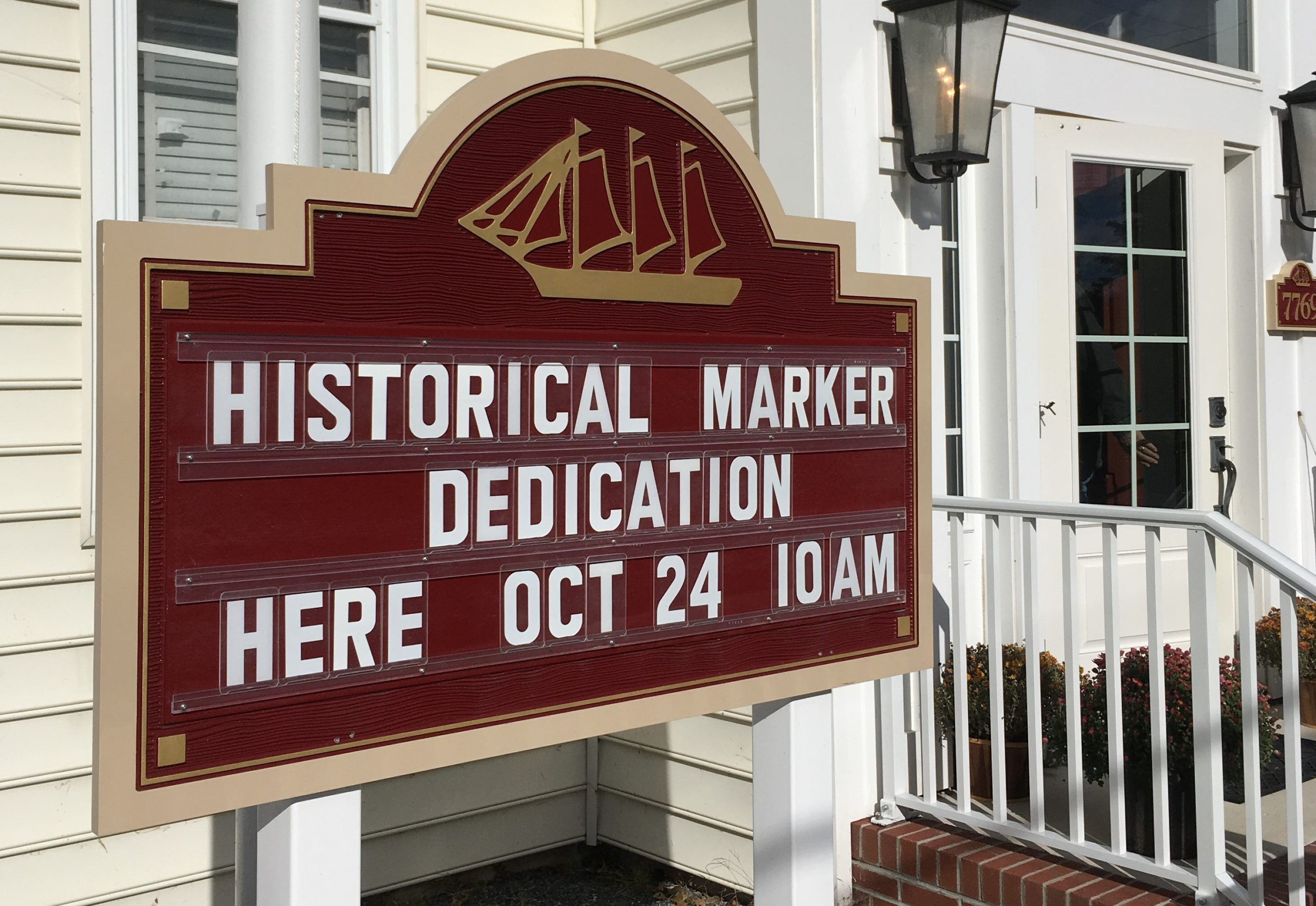
The Delaware Public Archives is to be consulted well in advance of scheduling a dedication. A date should not be set for a ceremony until a realistic completion and shipping date for the marker is confirmed.
The planning of a marker dedication, including inviting the sponsoring legislator(s) and local officials, is the responsibility of the requestor and requires consultation with the Historical Marker Program Coordinator. Please reserve time in the event for sponsoring legislator(s) and a representative from the Delaware Public Archives to speak. See Dedicating your Historical Marker for more information.
The Historical Markers Program Coordinator will arrange for the installation of the new historical marker in the previously approved location during the week of the dedication. The Delaware Public Archives submits a ticket with Miss Utility and coordinates the installation of new historical markers with property owners and the installation team. Installation is scheduled according to prior commitments and weather. Once installed, the marker will remain covered until the marker dedication when it is officially unveiled.
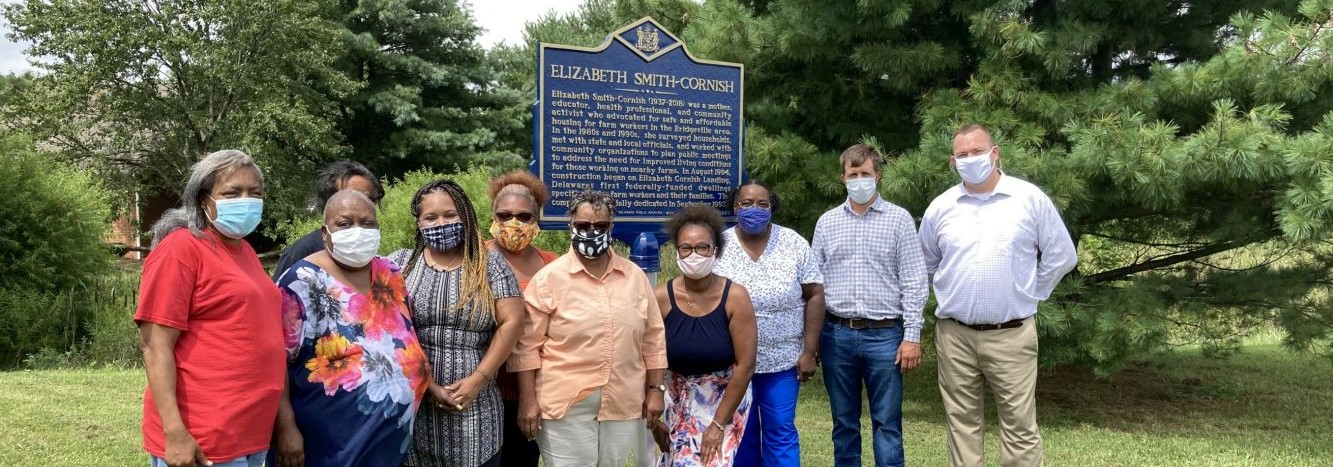
The planning of the marker dedication event, including inviting legislators and local officials, is the responsibility of the constituents who applied for the historical marker. When planning the ceremony, please be sure to clear the date and time with the Historical Markers Program Coordinator and sponsoring legislator(s) before publicizing the date with the community. A representative of the Delaware Public Archives tries to attend each marker dedication. Please contact the Historical Markers Program Coordinator for more information about dedication events, including examples of dedication event programs and media releases.
The Delaware Public Archives has established safety requirements for holding a historical marker dedication during the COVID-19 pandemic. The constituents planning the dedication are responsible for ensuring that all requirements are followed by event attendees.
Historical marker dedications are an opportunity to celebrate the subject of the marker as well as the work that went into having a new marker created. Planners should make sure that all individuals involved with researching and writing the marker narrative text are invited, as well as the legislator(s) who sponsored the marker, local officials who supported the marker, the State Archivist, and Historical Marker Program Coordinator.
All invited guests must be made aware of the Delaware Public Archives’ Historical Marker Dedication Safety Requirements and will be expected to follow all requirements.
Each historical marker dedication is unique and reflects the character of the community and the nature of the historical marker. Most marker dedications are held outdoors and last about 15-20 minutes. Please consider weather, traffic, parking, and space for social distancing when planning the event.
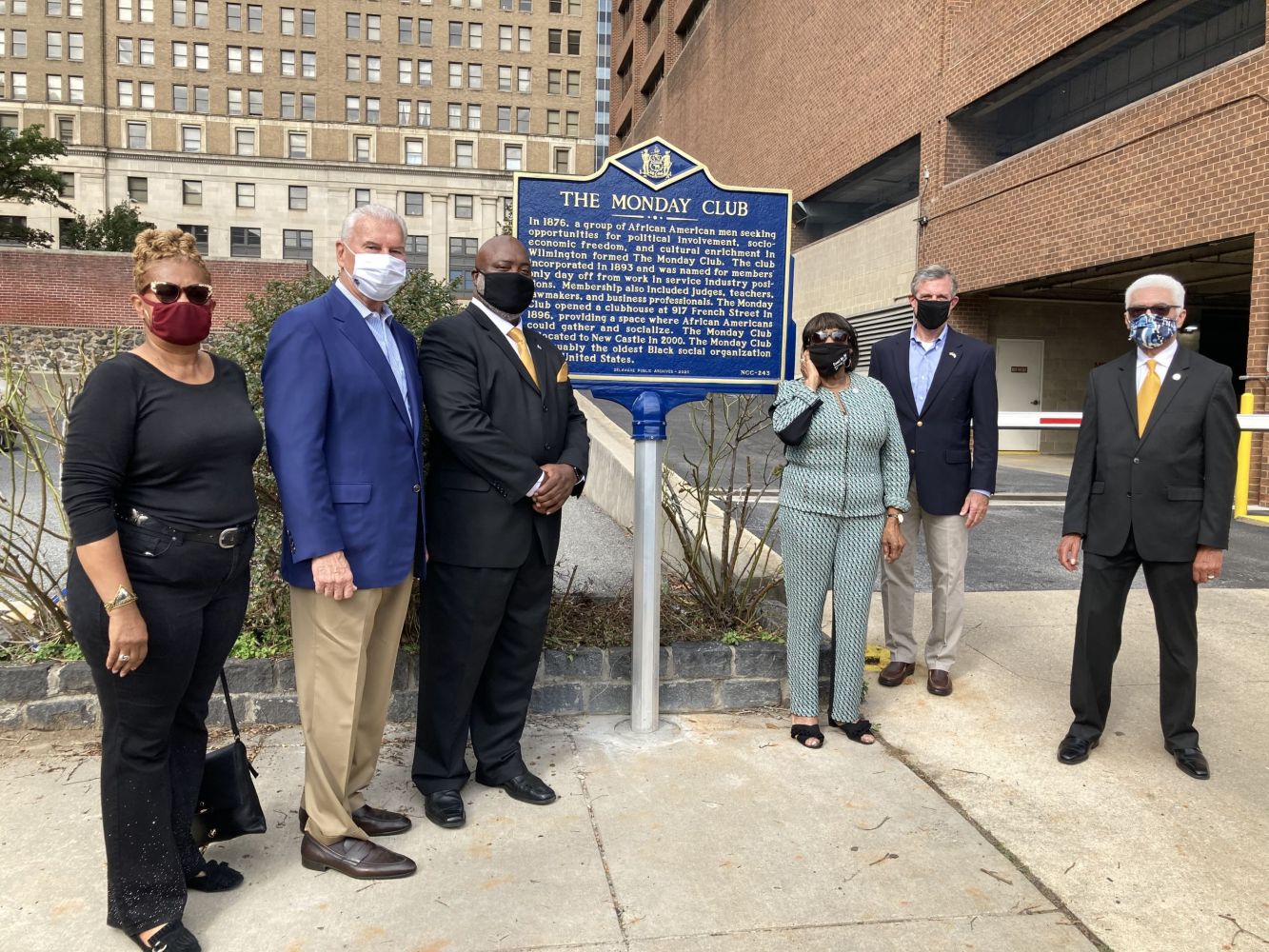
The Delaware Public Archives does not fabricate programs. However, sample programs from past dedications are available upon request. Common elements of each dedication include:
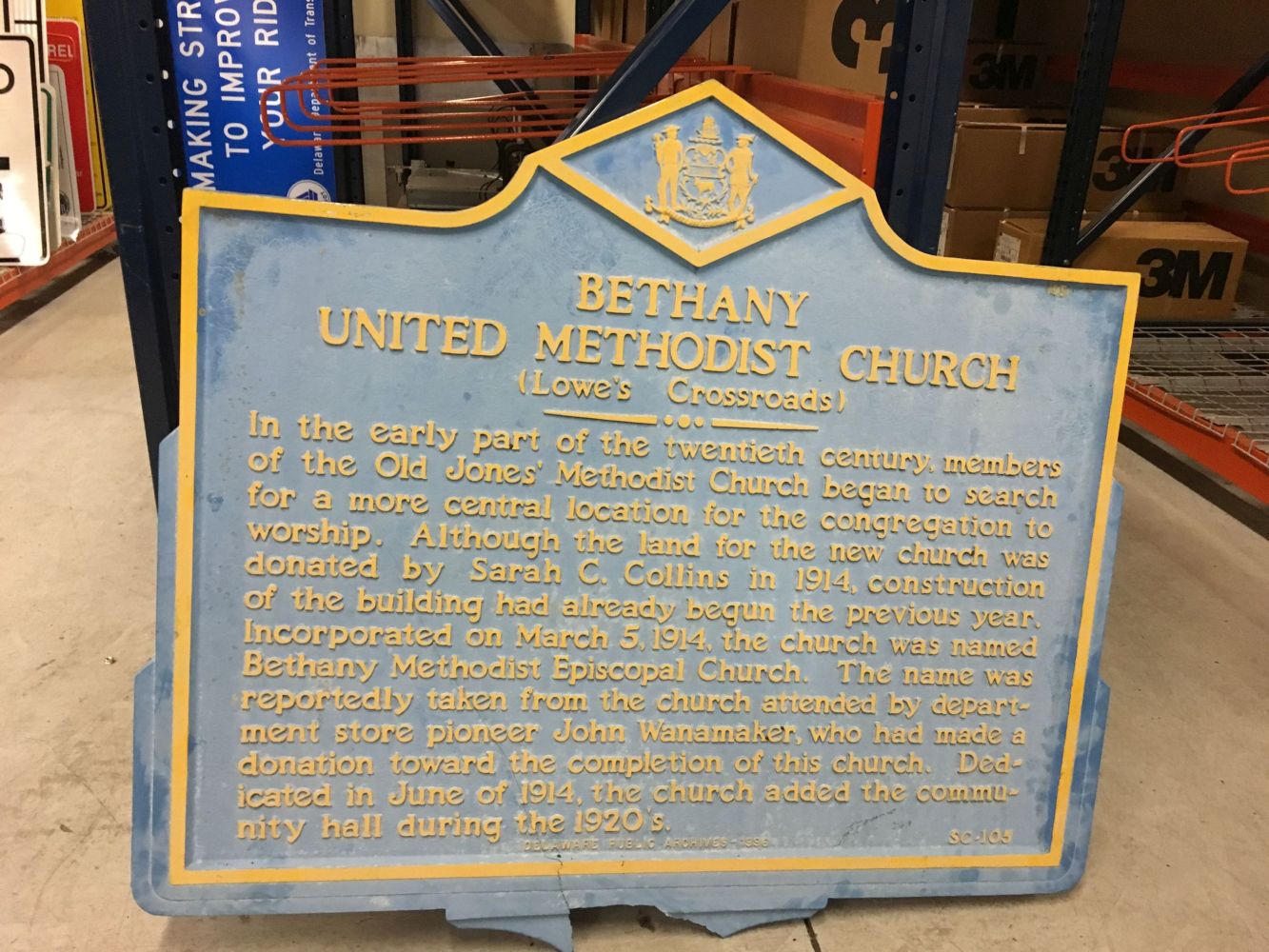
Use the Report a Missing or Damaged Historical Marker form on the website to report a missing or damaged historical marker or contact the Historical Markers Program Coordinator at historicalmarkers@delaware.gov or 302-744-5000.
Once the Delaware Public Archives is notified about a damaged marker, the damage will be assessed, and next steps will be determined.
Historical markers are the property of the State of Delaware. Please do not attempt to relocate or repair markers on your own. Most repairs must be made by the manufacturer of the marker. Relocations must be completed by authorized vendors. Attempting to relocate or repair the marker on your own will damage the marker, possibly irreparably.
Markers are the property of the State of Delaware. All damaged markers must be returned to the Delaware Public Archives.
Please contact the Delaware Public Archive’s Mabel Lloyd Ridgely Research Room to learn more about any historical marker subject.
This website only lists markers that were installed as part of the Delaware Public Archives’ Historical Markers Program. It does not include markers and plaques placed by communities or private entities. If you find an error on the online inventory and/or if you believe a marker has been left off the website, please contact the Historical Markers Program Coordinator.
Delaware's Governor
State Directory
Elected Officials
General Assembly
Delaware Courts
State Employees
Cities & Towns
Delaware State Code
State Regulations
Business First Steps
Phone Directory
Locations Directory
Delaware Public Meetings
Voting & Elections
Transparency
Choose Health DE
Tax Center
Personal Income Tax
Privacy Policy
Weather & Travel
Contact State Agencies
Corporations
Franchise Tax
Gross Receipts Tax
Withholding Tax
Guides to Services
Help Center
Mobile Apps
E-mail / Text Alerts
Social Media


Built by the Government Information Center
©MMXXVI Delaware.gov