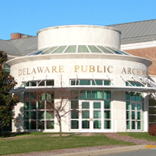

A slice of Delaware life is permanently preserved, thanks to the photography hobby of Dover resident Clarence D. Sypherd.
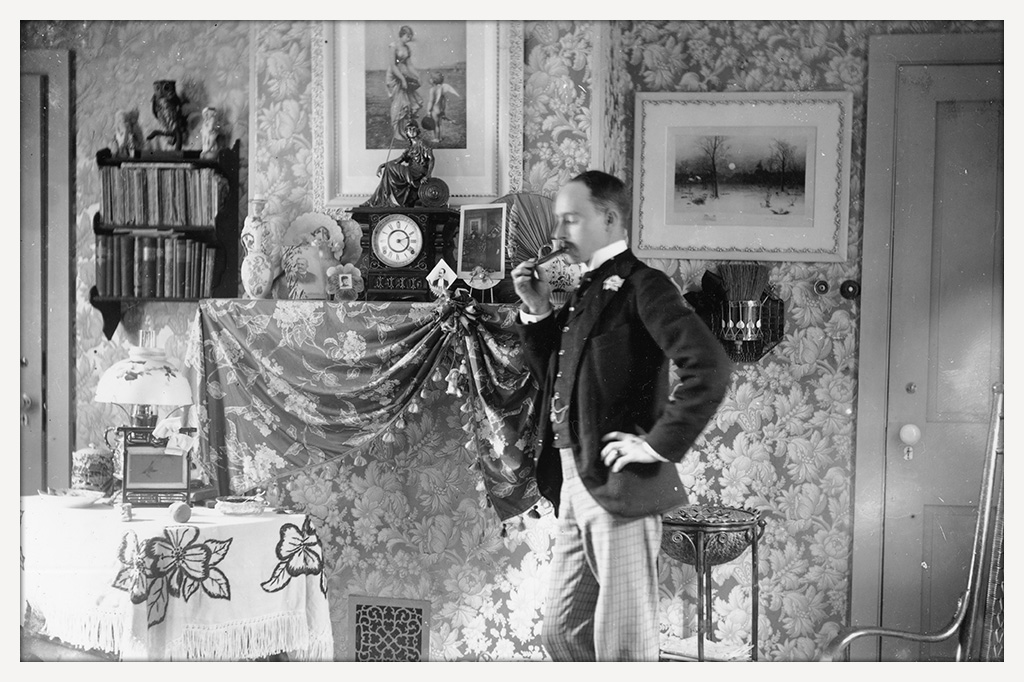
From wedding photos to images of historic buildings and horse-drawn buggies, Clarence D. Sypherd’s collection includes more than 130 black-and-white images documenting his life and surroundings from the late 1800s into the early 1900s.
The collection contains a few glass negatives and cyanotype prints from an earlier phase of photography, though most are prints made from film negatives.
The images reflect the growing popularization of photography, accelerated by George Eastman’s 1888 introduction of the simple, leather-covered Kodak box camera. This new technology helped make photography more accessible and ushered in informal snapshot photography, allowing people to document their everyday lives.
Eastman’s creation of flexible roll film – an invention that eliminated the need to change a glass negative for each picture – along with his camera’s simplicity, “placed the power of photography in the hands of anyone who could press a button,” according to the National Museum of American History.
This was the dawn of the snapshot: The do-it-yourself picture – often personal, unposed, and captured in a fraction of a second.
But only for those who could afford it.
The original Kodak cameras, which came with a 100-frame roll of film and a leather case, sold for $25 – the equivalent of nearly $900 today. Developing and printing the roll cost another $10.
For many working Americans, a camera remained a significant expense. When laborers might earn only a few dollars a day, do-it-yourself photography was still out of reach for many families.
Later, Eastman Kodak introduced the Brownie: An even more simplified box camera that was cheaper to make, used less film, and cost $1, which still left families of humble means out of the picture.
Early photography largely remained a hobby limited to those with disposable income, including Sypherd.
No documentation shows when he first picked up a camera, how long he took pictures, or who took some photographs that include him in their scenes. However, his photo collection is dated circa 1891-1910 – starting around the time he married the daughter of a successful Dover drugstore owner.
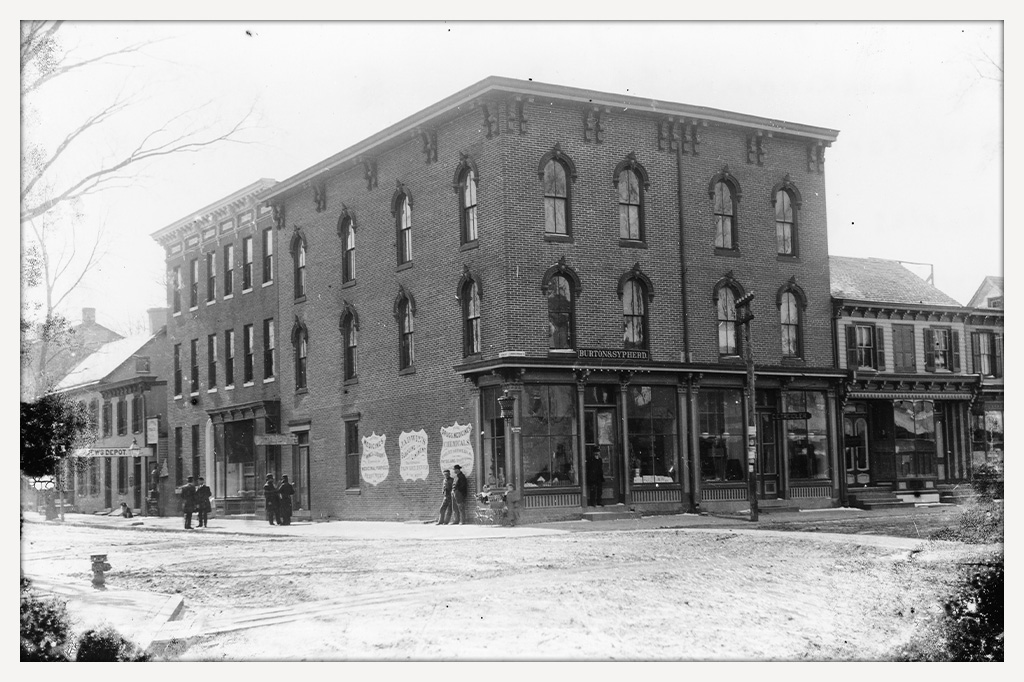
Born in 1864, Sypherd was the son of regional Methodist minister Reverend Jacob Owen Sypherd and his wife, Josephine Draper Sypherd, of Wilmington. He graduated from the Philadelphia College of Pharmacy and became a licensed pharmacist in 1887. He soon began working at a longtime Dover drugstore owned by his future father-in-law, David Foster Burton, on the corner of Loockerman and State streets.
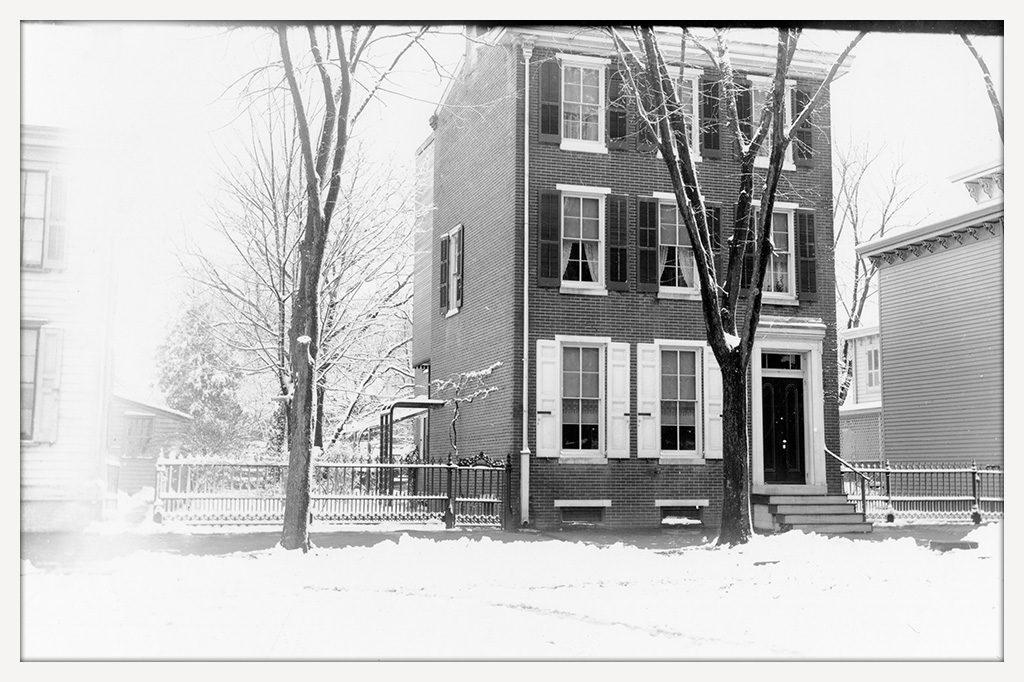
Sypherd and Maria E. “Minnie” Burton married in 1891, and their son, Clarence Burton Sypherd, was born four years later. The Sypherd family lived on South State Street in a house owned by Minnie Burton’s parents.
His father-in-law changed the drug store’s name to Burton & Sypherd, and Sypherd successfully continued the business after Burton passed away in 1893.
His success extended beyond the drugstore and reached deep into the community.
He was a First Lieutenant/Paymaster in the First Delaware Regiment during the Spanish-American War. He also served as a member of the State House of Representatives (with his election recorded in the federal Congressional Record), secretary and treasurer of the Dover-based Farmers & Merchants National Building & Loan Association, president of the Delaware Pharmaceutical Society, and assistant postmaster in Dover. His wife held the socially prestigious position of Regent of the Colonel Haslet Dover Chapter of the National Society Daughters of the American Revolution.
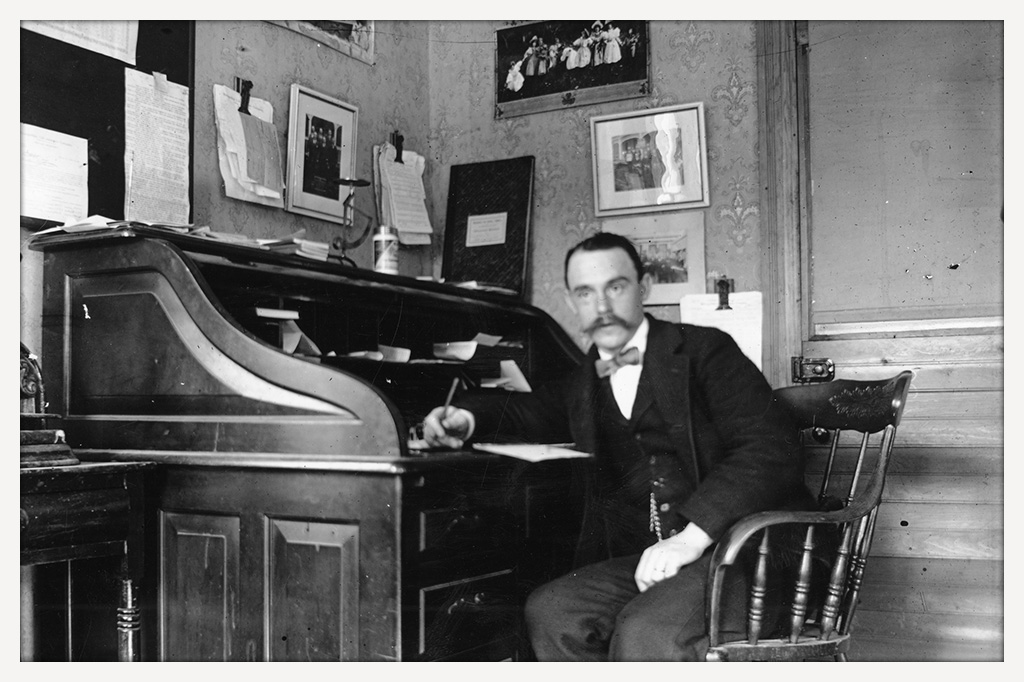
Sypherd, along with his wife and son, appears in many photographs in his namesake collection, which was added to the Delaware Public Archives for preservation nearly two decades ago, long after he passed away suddenly in 1926.
A news article printed in the February 27 edition of Every Evening, published in Wilmington and a forerunner of The News Journal/Delawareonline.com, described him as “one of Delaware’s well-known citizens” and said that he had died suddenly around 1 a.m. that day at the age of 61. He was praised for his contributions to his adopted hometown of Dover.
The article said he “apparently was in his usual health” while working the day before at the Dover Post Office. According to the article, after coming home around 9:30 p.m., “Mr. Sypherd went to the cellar to fix the fire and while in the cellar was seized with a severe coughing spell from which he never rallied.”
The Sypherds’ family physician, Dr. E.S. Anderson, went to their house and could not save him, but stayed “with him until the end came.” He was buried, as his wife later was, at the Old Presbyterian Church in Dover.
In addition to his wife and son, he was survived by his brother, Wilbur Owen Sypherd, who found success in academia. After graduating from Delaware College, a predecessor of the University of Delaware, Wilbur Sypherd became an English professor there and later chaired the English department. He served as the University of Delaware’s president in 1944-46, and a residential hall built on the Newark campus in 1958 is named for him.
His brother is not identified by name in any of the Clarence D. Sypherd Photograph Collection images. Still, the collection includes unidentified family members and friends, along with photos of family properties and various family trips.
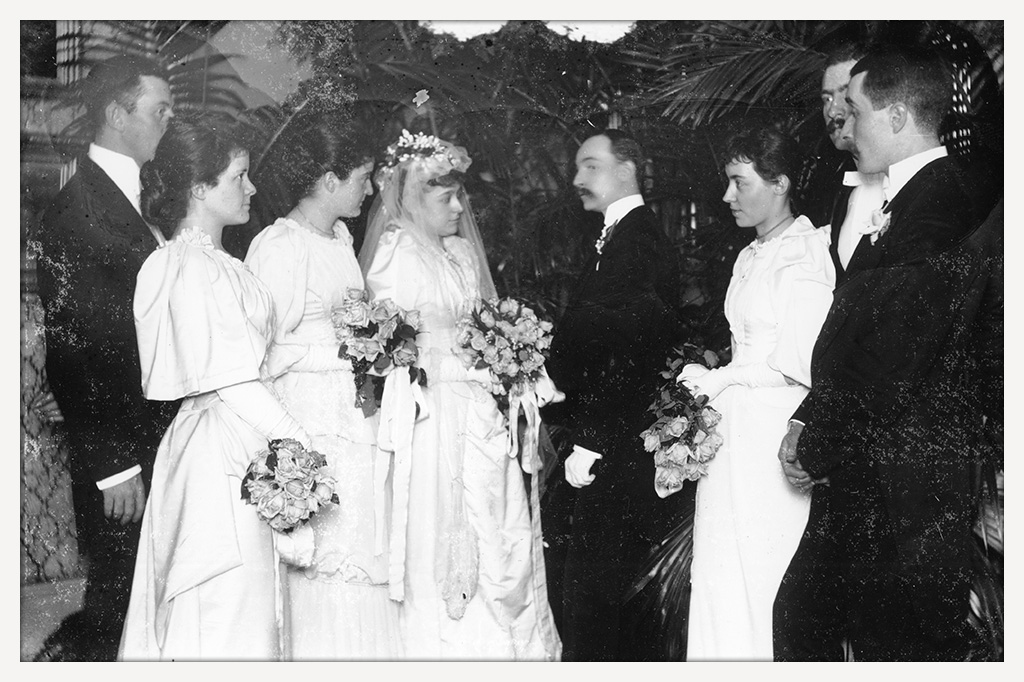
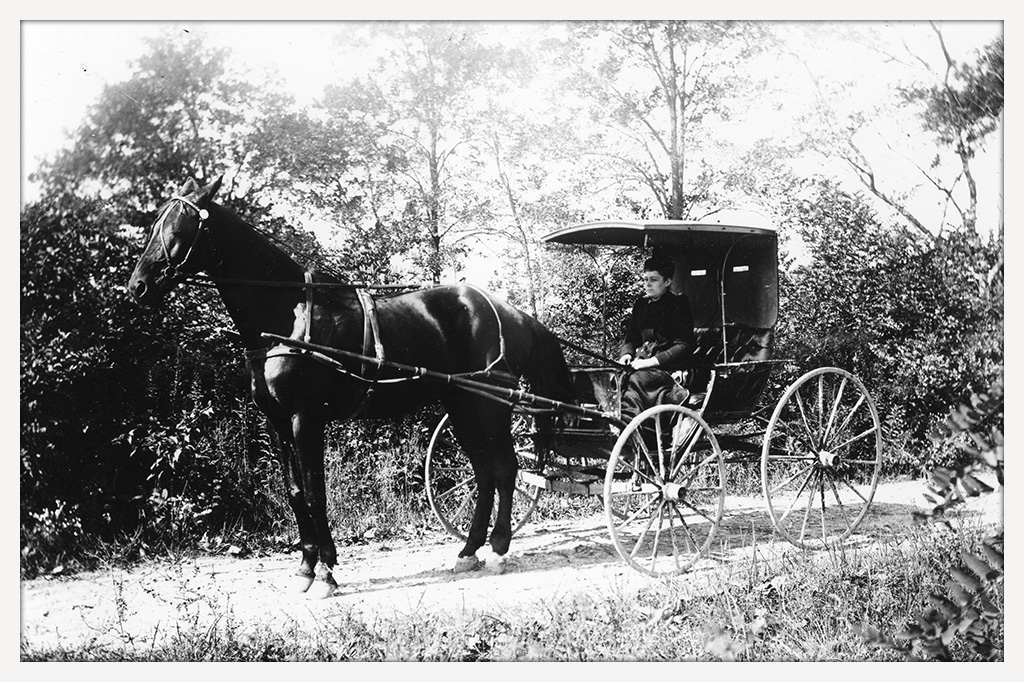
Clarence’s wife, Minnie, who died in 1937, remains an eternally elegant, newly dressed bride in their wedding photos, standing with her husband and a formally dressed wedding party that appears to include a maid of honor and two bridesmaids. In another picture, she is shown at an unknown location, riding in an elaborate horse-drawn carriage.
Sypherd himself is the subject of two fascinating portraits in the collection. One shows him sitting at a rolltop desk he used for work, judging from the surrounding paperwork. The other picture shows him posing in a fancy, heavily embellished parlor, surrounded by the furnishings of the well-to-do of his time.
Especially notable are some of his photographs taken around Dover, including one of his son on a snow heap after a major storm. A summertime photo shows a group of unidentified family members at the first in a row of beach cottages on Kitts Hummock, some of them leaning on each other or sprawling and smiling on the sand. Gentle waves of the Delaware Bay lap ashore not far from the photo subjects. None of them are wearing the swimsuits of the era, then known as “bathing costumes.”
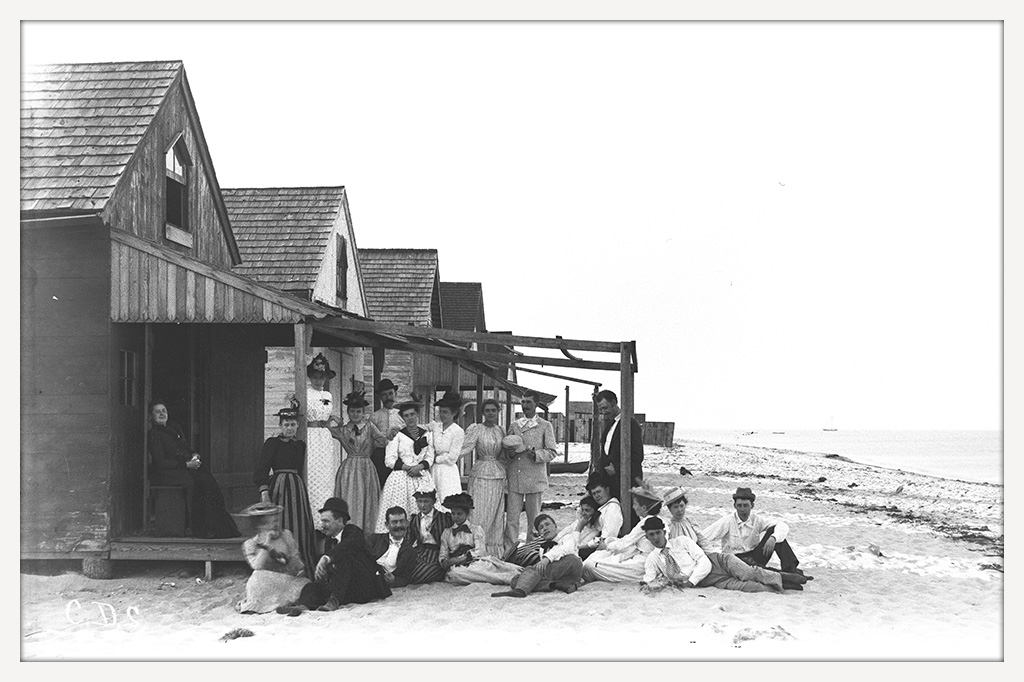
That’s just one photo in the collection that rewards viewers who take a moment to focus on the delightfully humanizing details, like facial expressions.
Some of Sypherd’s photos were damaged, including glass negatives that got broken, chipped, or are flaking, along with printed images that faded almost completely over time. Additionally, some of the pictures are permanently displayed in a photo album with pages that have grown dry and brittle.
His pictures are part of one of about 50 private photograph collections preserved in the Archives, which opened in 1905. Created to preserve the paper records officially created by the state government, the Delaware Public Archives has grown to include vastly more diverse resources, including an estimated 1.5 million images and hundreds of other collections.
Personal collections such as Sypherd’s help preserve documentation of Delaware life, sharing the experiences of a successful pharmacist in our capital city as the 1800s turned into the 1900s.
More than 100 of Sypherd’s photographs – donated to the archives in 2008 and digitized after preservation in 2013 – are available for free, public viewing in the Delaware Public Archives’ Digital Collections section. To see the Sypherd Collection’s digitized photos now, click here.
For those unfamiliar with exploring the Archives’ publicly preserved images, the website at archives.delaware.gov makes it easy to search all collections – or those you select – using the CONTENTdm search tool.
The same methods may be used for keyword searches to see what the Delaware Public Archives has in its image and document collections about other people, places, and things that interest you. It takes only moments to search by name, location, or subject. You’ll be surprised by the quantity and variety of what’s available at your fingertips.
To help guide your search, the top-notch Mabel Lloyd Ridgely Research Room team can help answer your questions. You can contact them by emailing archives@delaware.gov. The Archives also offers free group tours, hosts programs and exhibits, and assists researchers by sharing free teaching tools and eBooks and answering questions. They can also recommend many interesting topics that community groups can present on at their own locations.
Because of the dedicated, knowledgeable Archives staff and contributions from community members, the Delaware Public Archives serves as a tremendous resource for discovering our shared past and learning about the generations of First Staters who shaped the Delaware we know and love today.
Delaware's Governor
State Directory
Elected Officials
General Assembly
Delaware Courts
State Employees
Cities & Towns
Delaware State Code
State Regulations
Business First Steps
Phone Directory
Locations Directory
Delaware Public Meetings
Voting & Elections
Transparency
Choose Health DE
Tax Center
Personal Income Tax
Privacy Policy
Weather & Travel
Contact State Agencies
Corporations
Franchise Tax
Gross Receipts Tax
Withholding Tax
Guides to Services
Help Center
Mobile Apps
E-mail / Text Alerts
Social Media


Built by the Government Information Center
©MMXXVI Delaware.gov