If you’ve ever pulled an old map, blueprint, diploma, or letter out of a tube, you know the problem right away: it wants to curl right back up the moment you let go. Rolled and curled documents are among the most common condition issues we see at the Delaware Public Archives, and they’re also among the easiest to worsen with a rushed fix. Before you reach for a stack of heavy books, here’s how to do it the right way.
Why Documents Curl
Paper absorbs and releases moisture from the air. When you store it rolled or folded for long periods, its fibers can develop a “memory” of that shape. Forcing a document flat while dry can crack the paper, damage ink, or tear brittle edges. Gentle humidification lets the fibers relax so you can flatten the document safely.
Before You Start: A Few Ground Rules
Never force a rolled document open. If it resists, stop. Forcing it can cause creases or tears that are far harder to repair.
Check for fragile paper, flaking media, mold, or water-sensitive inks. Documents with these conditions, or significant historical or monetary value, should be evaluated by a professional conservator.
Work on a clean, flat, dry surface, and wash and dry your hands before handling the material.
Method 1: Gentle Weighting (For Mild Curls)
For stable, non-sensitive material with only a slight curl:
Lay the document flat on a clean surface, with the curl facing down, if possible.
Cover it with a sheet of unbuffered, acid-free tissue or blotting paper.
Place a piece of clean glass, plexiglass, or a smooth board on top.
Add gentle, even weight, like a few flat books, and leave for 24 to 48 hours.
Check periodically. Increase weight gradually rather than starting heavy.
This method may help mild curls because pressure alone can retrain paper with minimal existing “memory,” but it will not work on a tightly rolled or long-stored document.
Method 2: Controlled Humidification (For Stronger Curls or Rolls)
Before trying this method, make sure to clean your document well. Mixing dirt and water will create mud!
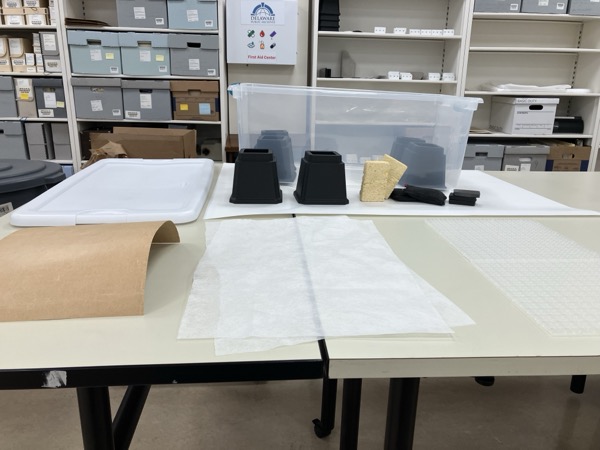
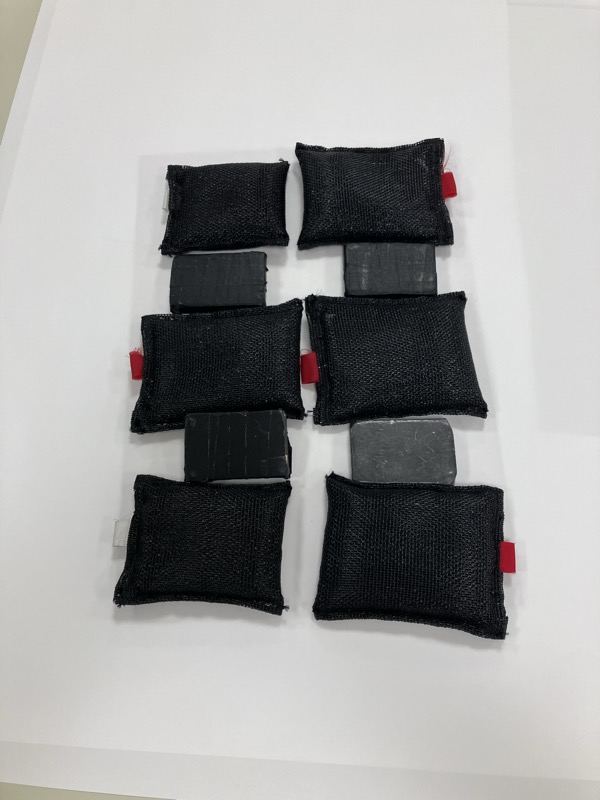
Materials you will need:
Plastic tub with a well-fitting lid, large enough to fit your document without bending, curling, or folding
4-6 sponges
Plastic grate that fits in the tub
4-6 bed risers, or other similarly sized supports to lift the grate
Spunbonded polyester, like Hollytex. You can buy it from archival suppliers or at garden stores as garden row covers, but verify the fabric is uncoated, undyed, and untreated.
Blotting paper
Weights
Materials needed for controlled humidification.
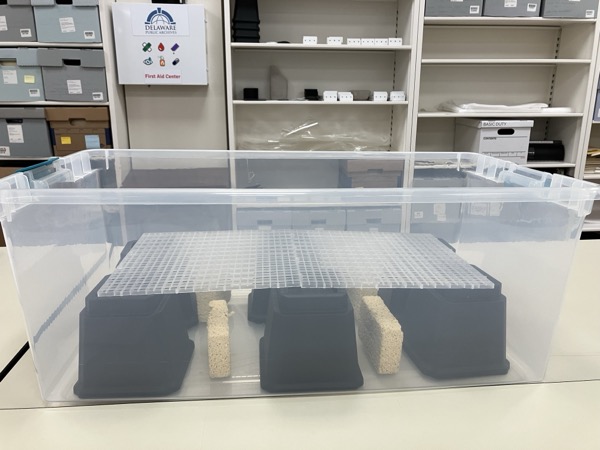
Create a humidity chamber. Place your risers in the tub with space between them. Wet the sponges so they are damp but not dripping, place them between the risers, and set the grate on the risers. Make sure the grate doesn’t touch the sponges, so the document never touches moisture directly.
A plastic tub set up as a humidity chamber.
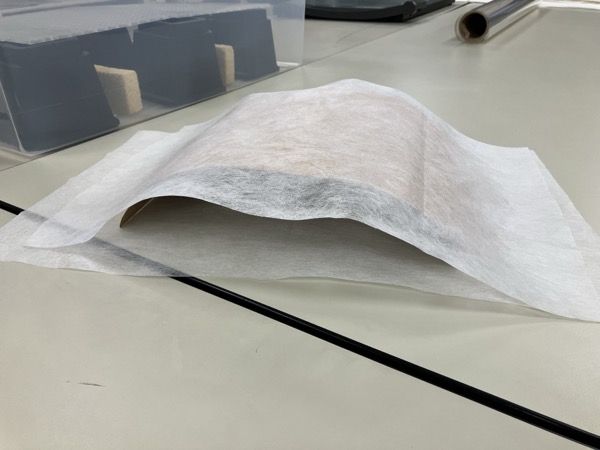
Surround the document with the polyester. Sandwich the document between pieces of polyester larger than the document but smaller than the tub. If the material folds in on itself, place another piece between the folds to keep them from touching.
A curled document sandwiched between pieces of spunbonded polyester.
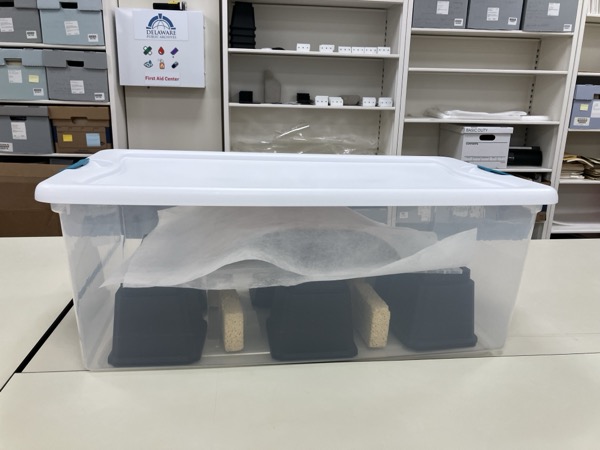
Place the covered document on the rack and close the container to trap humidity.
The completed humidification chamber.
Check every 30 minutes to an hour. Look for the paper to become pliable enough to unroll without resistance. This can take anywhere from 30 minutes to a few hours, depending on paper weight and how long it was rolled. Do not go over 6 hours. If your document is still curled, continue to the next steps and repeat steps 1-4 in a few days.
Unroll gently once the material is relaxed. Don’t wait for it to feel fully limp; over-humidifying can cause cockling (rippling) or damage.
Flatten and dry under blotters. Sandwich the document between sheets of clean blotting paper or unbuffered tissue and evenly apply weights. Change the blotting paper if it feels damp and let the document dry fully over 24 to 72 hours.
A document drying under blotting paper and evenly applied weights.
When to Call a Professional
Bring the document to a paper conservator instead of treating it yourself if you notice:
Flaking, powdery, or water-sensitive media
Heavy staining, mold, or pest damage
Extreme brittleness or splitting
High historical, legal, or monetary value
Delaware residents are welcome to contact the Delaware Public Archives for guidance. We’re happy to advise before you attempt treatment and can refer you to regional conservation labs for items that need specialized care.
For more information about how to preserve your records at home, check out our Preservation Basics page.