
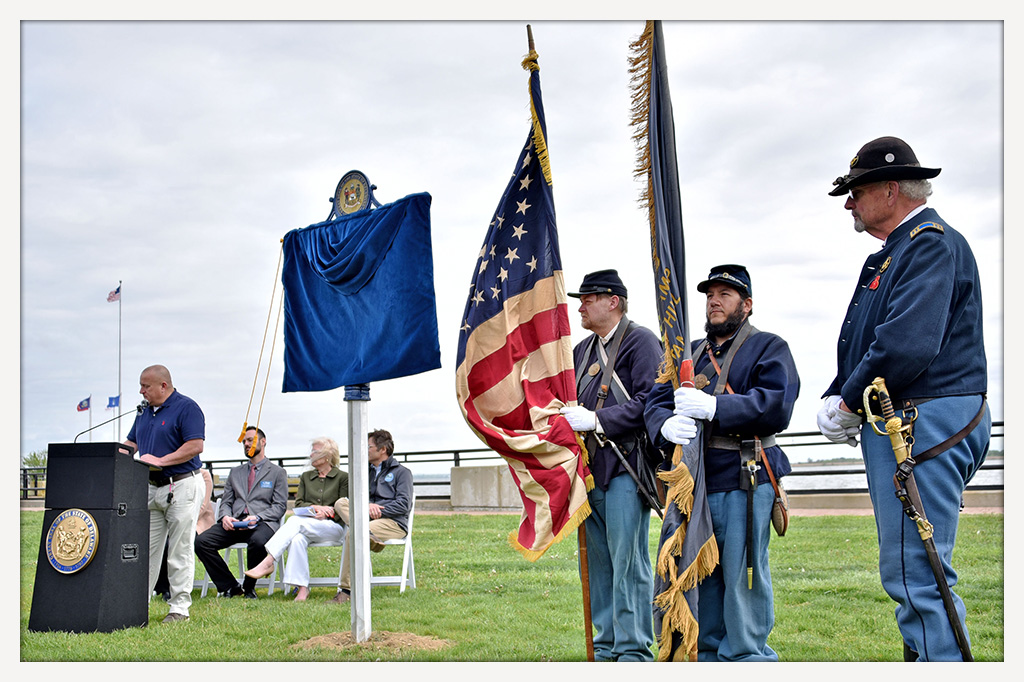
Saturday, April 25, 2026, was a memorable day at Fort Delaware State Park. Community members, history enthusiasts, and state officials gathered in Delaware City for the unveiling of a State of Delaware Historical Marker for Fort Delaware. Several special guests gave remarks, including Delaware City Mayor Paul H. Johnson, Sr., Delaware Public Archives Director and State Archivist Maegan Peterman, Department of Natural Resources & Environmental Control Secretary Gregory Patterson, Fort Delaware Society President Mitch Cummings, and State Senator Nicole Poore. Each speaker highlighted Fort Delaware’s significance to Delaware and American history. To mark the occasion, reenactors from the 2nd Delaware Volunteer Infantry Regiment fired a dramatic volley as the marker was unveiled.
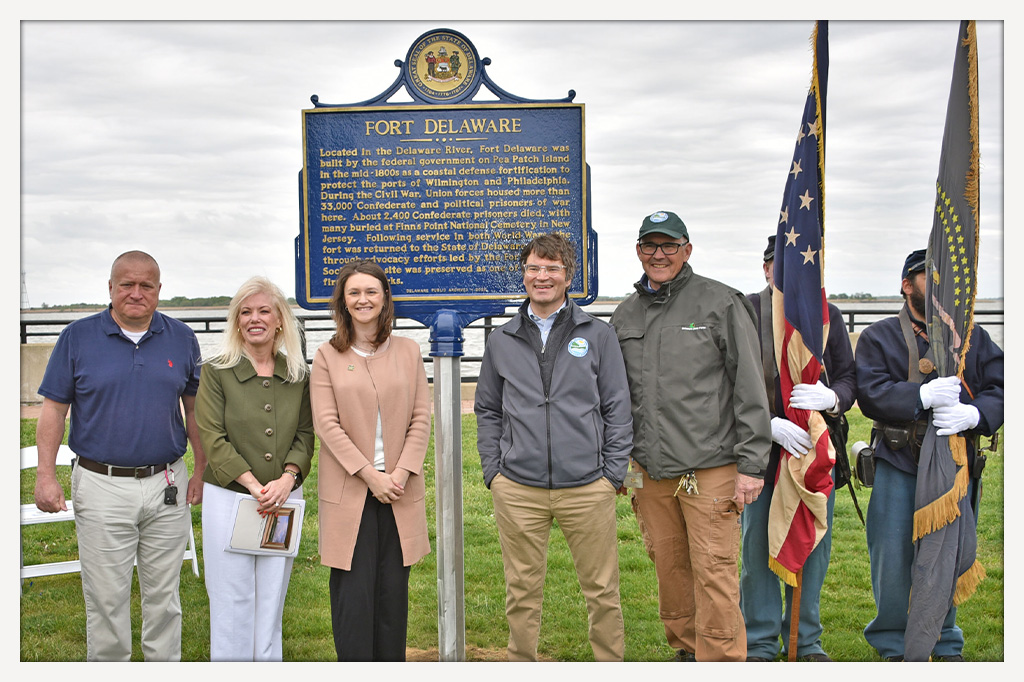
The Fort Delaware marker is the newest addition to the State of Delaware Historical Markers Program. This program places markers at historically significant locations and sites across the state. The markers remind communities that the places around them have important stories to tell. Fort Delaware is a great example. Its history covers several centuries, multiple wars, and many important moments in the American story.
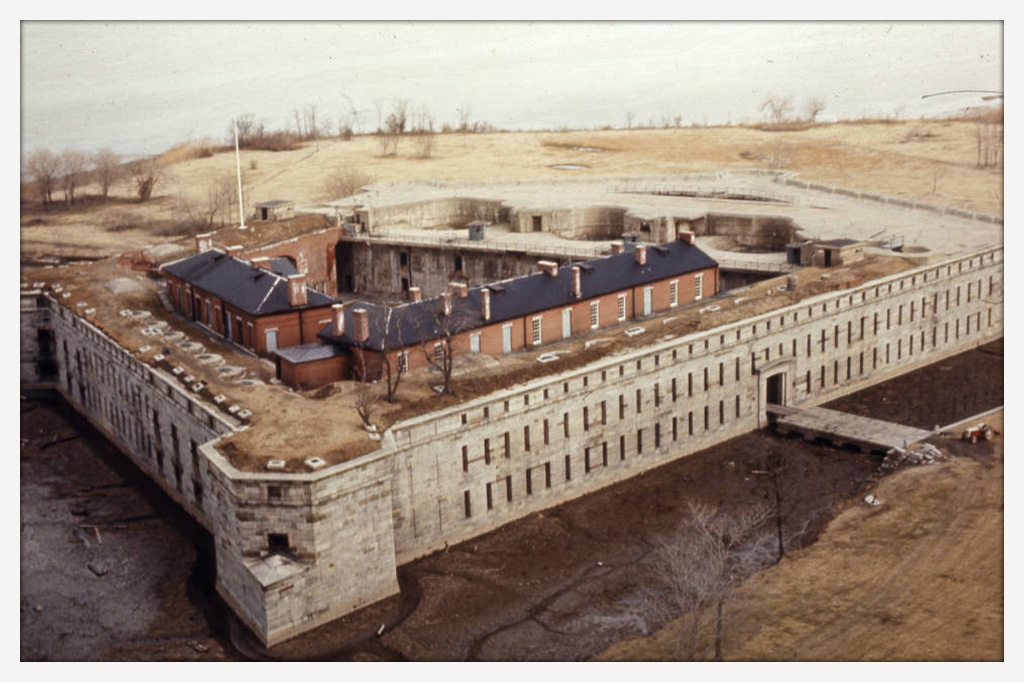
Fort Delaware has a long and fascinating history. Delaware gave Pea Patch Island, a small, marshy island in the middle of the Delaware River, to the federal government in 1813. The current stone-and-brick fort was completed around 1859. It was built to protect the ports of Wilmington and Philadelphia from attack. When the Civil War started, the fort became a Union prison camp. At its busiest, it held up to 10,000 Confederate prisoners of war. Approximately 2,400 died while imprisoned there. The fort was reused during World War I and World War II, and in 1951, it officially opened as one of Delaware’s first state parks.
Today, Fort Delaware State Park covers 248 acres and is listed on the National Register of Historic Places. To get there, visitors take a short, half-mile ferry ride from Delaware City. Once on the island, costumed interpreters and reenactors bring Civil War history to life. Visitors can watch a blacksmith at work, see how laundry was done in the 1800s, and even witness a live firing of a large Civil War-era cannon called the Columbiad. The park is also home to one of the largest bird nesting sites on the East Coast, with thousands of herons, egrets, and ibises living there each year. The Fort Delaware Society, a non-profit group, plays a key role in preserving and promoting the site, and their support helped make the marker unveiling possible.
The Fort Delaware marker is a meaningful milestone in the State of Delaware Historical Markers Program, which continues to invite nominations for Delaware stories still waiting to be recognized. If you know of a person, place, event, group, or institution that has made an impact on Delaware’s history, we encourage you to submit a researched application for consideration. You can apply online here. In the meantime, we hope you will take a trip to Fort Delaware State Park to see the new marker in person. Take the ferry from Delaware City, explore Pea Patch Island, and experience history up close. For tickets and visitor information, visit Fort Delaware’s website.
Delaware's Governor
State Directory
Elected Officials
General Assembly
Delaware Courts
State Employees
Cities & Towns
Delaware State Code
State Regulations
Business First Steps
Phone Directory
Locations Directory
Delaware Public Meetings
Voting & Elections
Transparency
Choose Health DE
Tax Center
Personal Income Tax
Privacy Policy
Weather & Travel
Contact State Agencies
Corporations
Franchise Tax
Gross Receipts Tax
Withholding Tax
Guides to Services
Help Center
Mobile Apps
E-mail / Text Alerts
Social Media


Built by the Government Information Center
©MMXXVI Delaware.gov